

Hospital Operations Sync Platform
One live view of a hospital's beds, queues and stock, with models that forecast what runs out next.
- Role
- Full-stack engineering and machine learning
- Timeline
- Jan 2026 · hackathon build
- Stack
- Django REST Framework, React, MySQL, scikit-learn, JWT, Razorpay
- Recognition
- Hackathon project
- ML models in the product
- 6
- database tables
- 33
- role-based dashboards
- 4
- feature modules
- 11
Overview
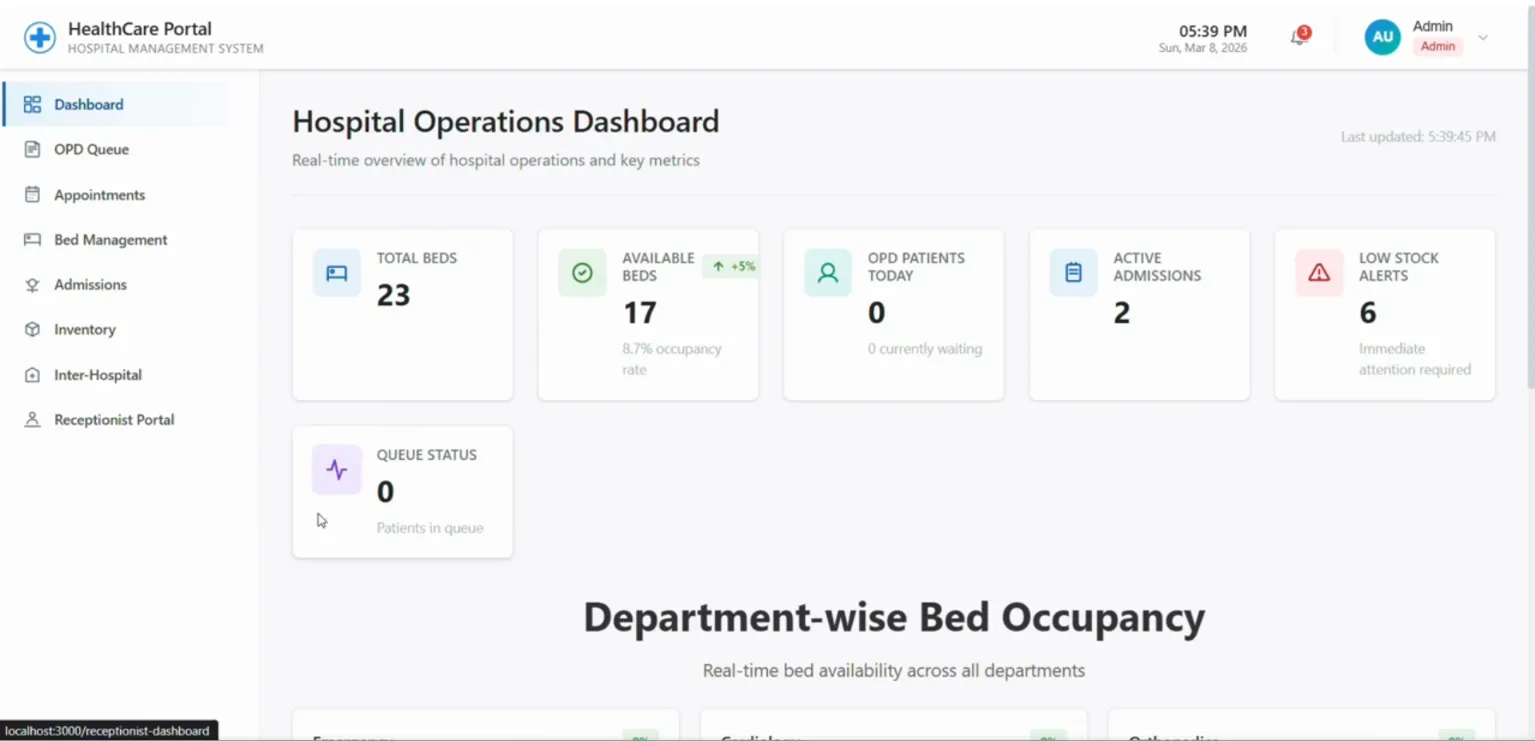
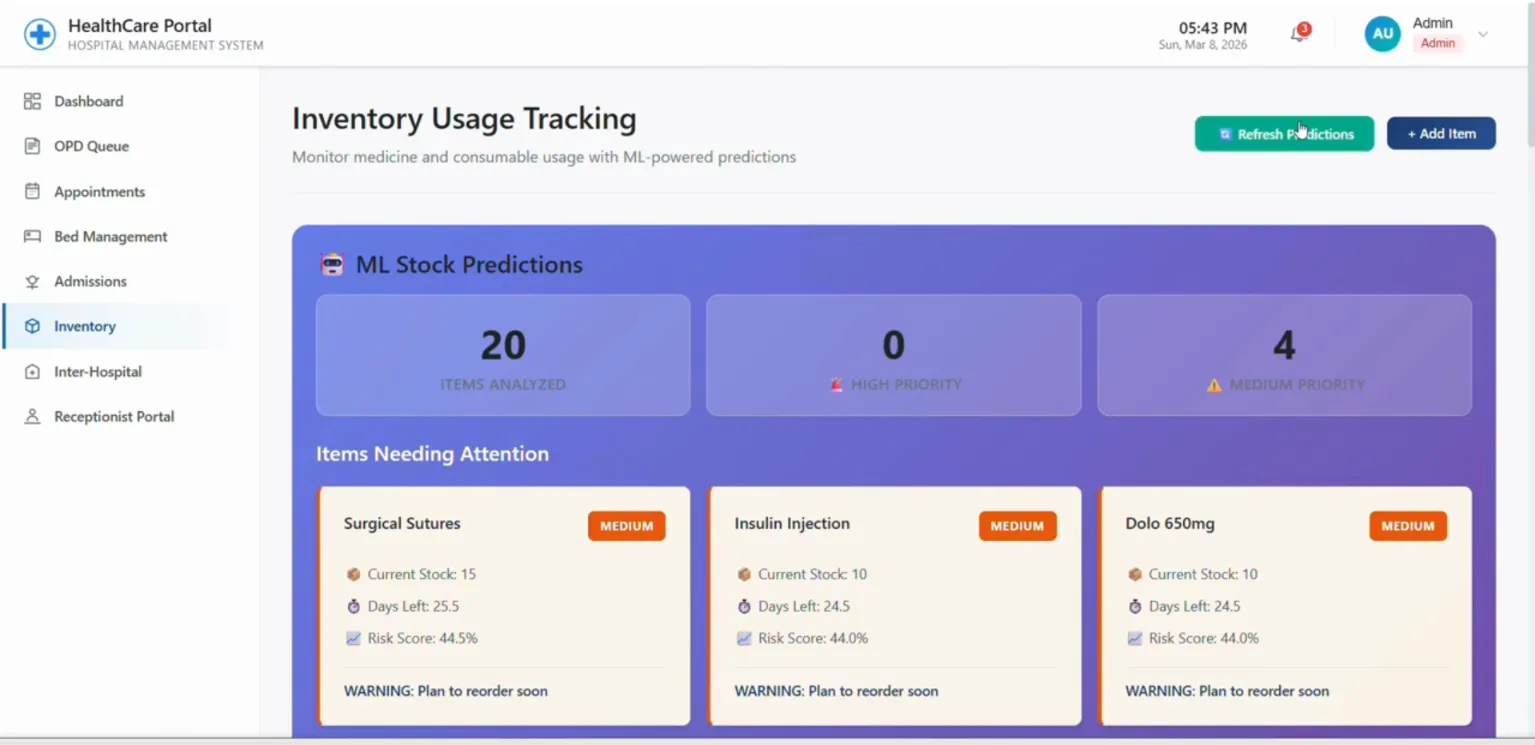
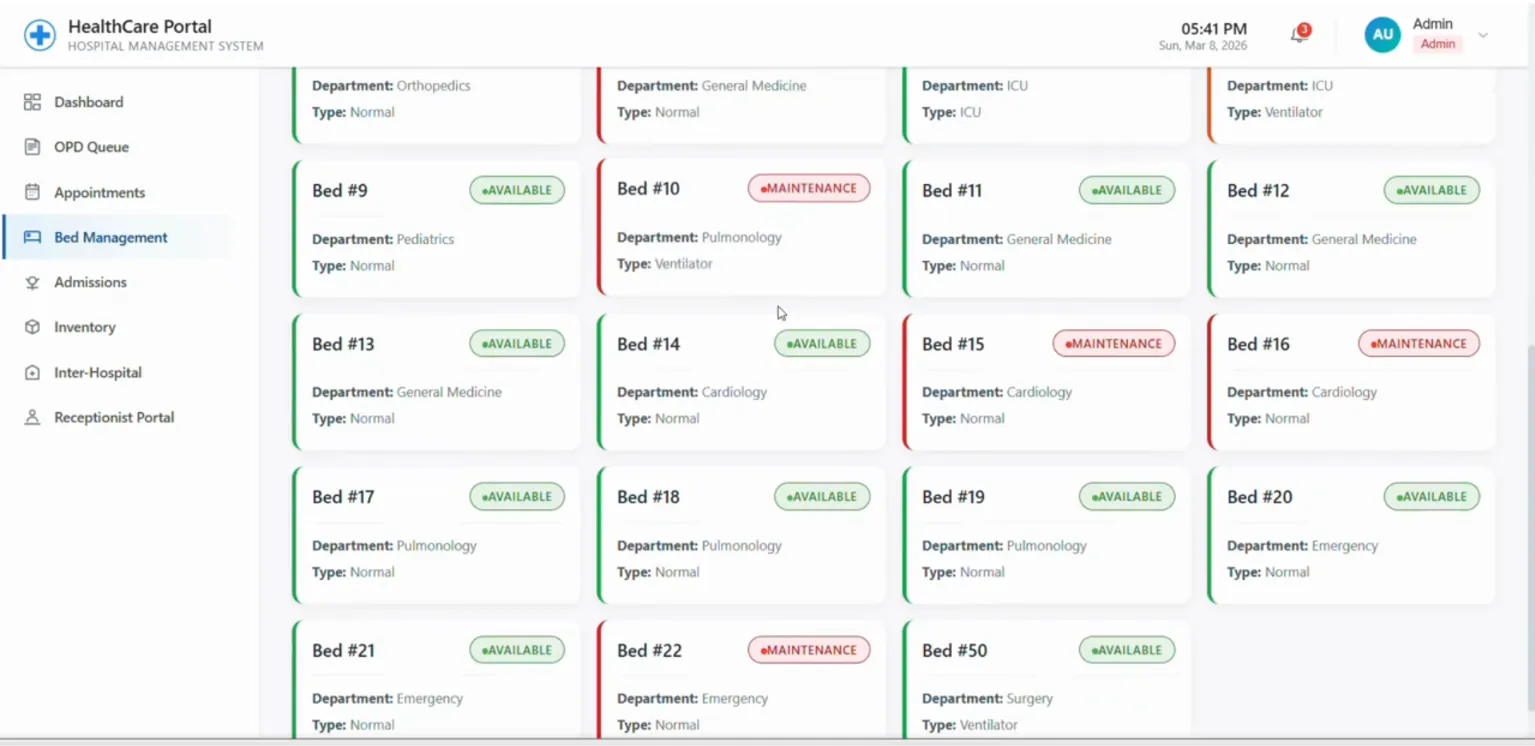
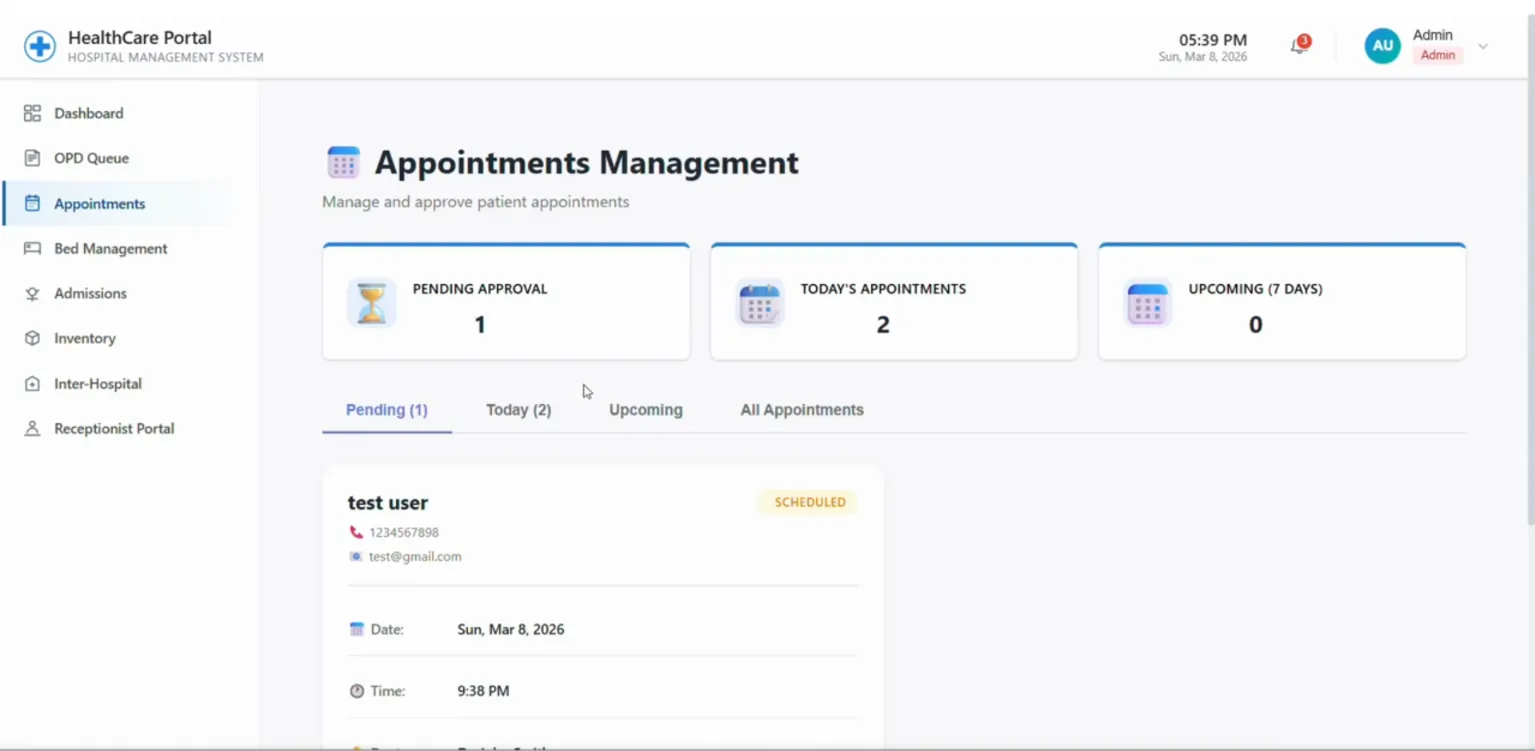
A hospital operations platform that gives doctors, nurses, administrators and receptionists their own live dashboards (beds, OPD queues, admissions, inventory and billing) backed by machine-learning models that predict wait times, stockouts and financial risk.
The problem
Hospital staff juggle beds, queues, stock and billing across disconnected tools. Shortages and long waits are usually discovered after they have already happened, and neighbouring hospitals have no quick way to share capacity.
The approach
Put every operational signal into one platform with a dashboard for each role, then add models that look ahead: how long the next patient will wait, which medicines will run out, and where money is being lost.
AArchitecture
How it fits together
01Clients
- React dashboards Doctor, nurse, admin and receptionist
- City capacity view Anonymised bed and ICU availability
02API
- Django REST Framework 11 apps behind JWT authentication
- Payments Razorpay orders, verification and webhooks
03Intelligence
- 6 scikit-learn models Wait time, stockout, profit and loss
- Weather demand engine Weather + air quality → medicine demand
04Data & services
- MySQL 33-table relational schema
- OpenWeatherMap Current weather and AQI, cached for 1 h
BEngineering decisions
The calls that mattered
- 01
Predictions where they change a decision
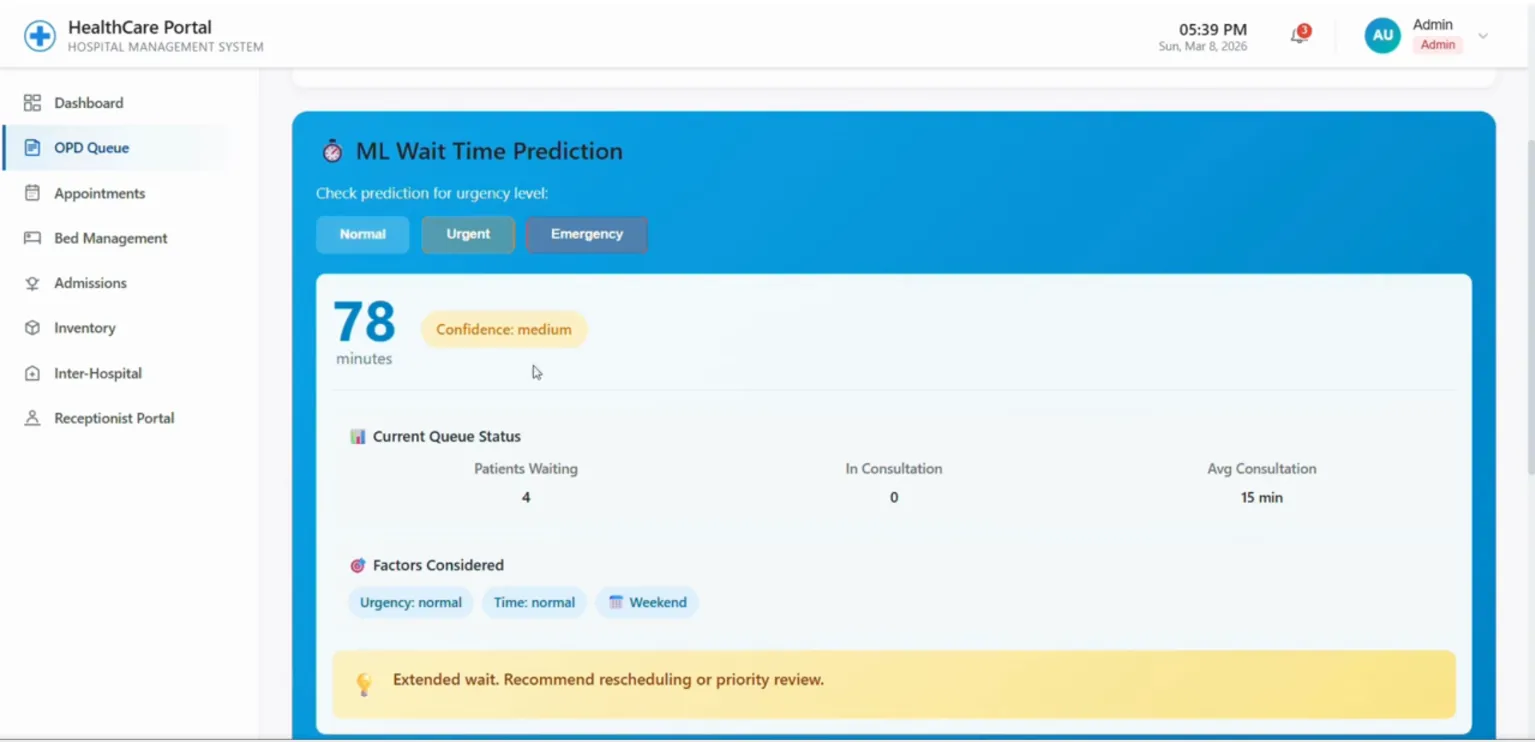
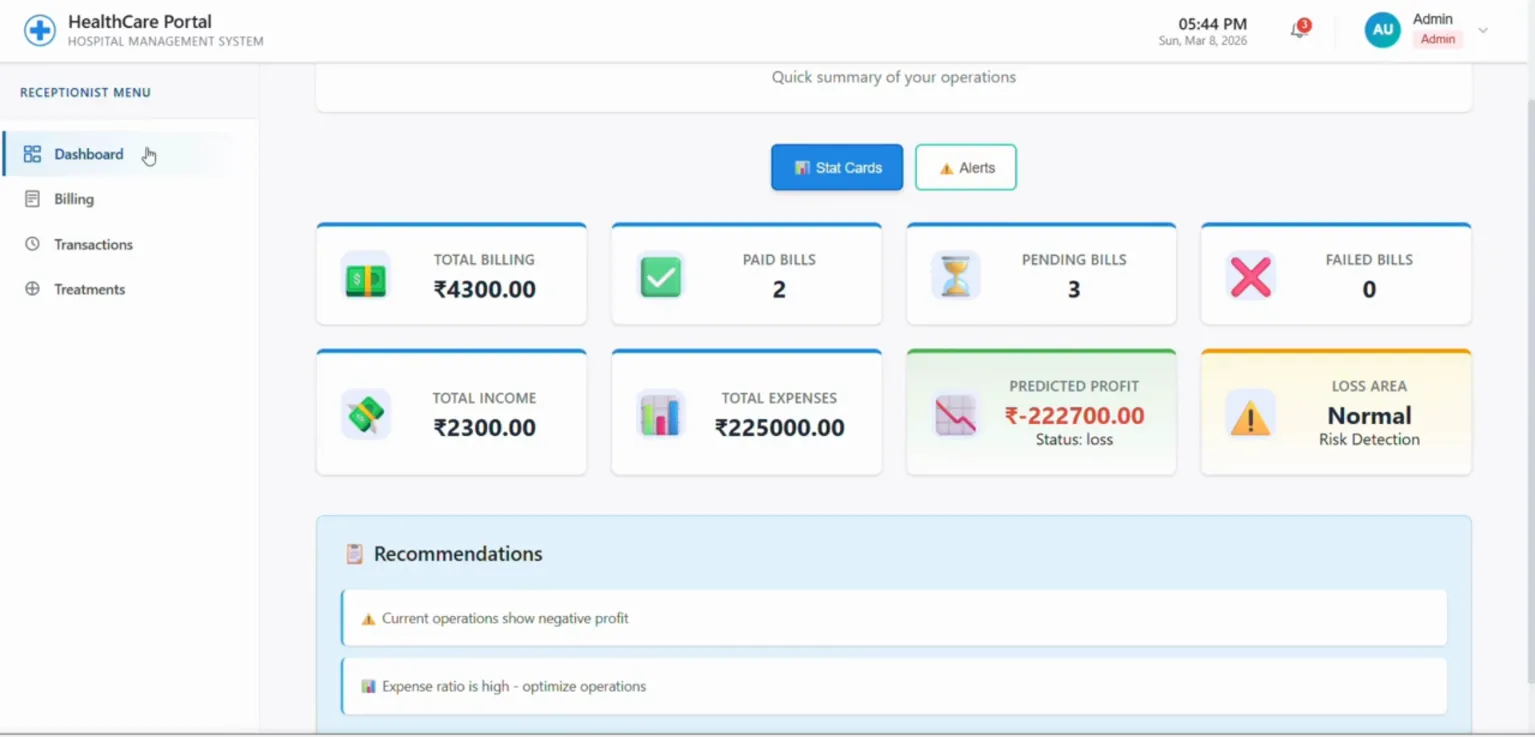
Instead of one showcase model, each prediction sits where staff act on it: wait-time estimates in the OPD queue, stockout risk and days-to-stockout in inventory, and profit and loss-area forecasts on the billing dashboard. The wait-time estimate falls back to a rule-based calculation if the model fails, so the queue never goes blank.
- OPD wait-time regression
- Stockout classification + days-to-stockout regression
- Profit and loss-area prediction
- Rule-based fallback for wait times
- 02
Weather-aware medicine demand
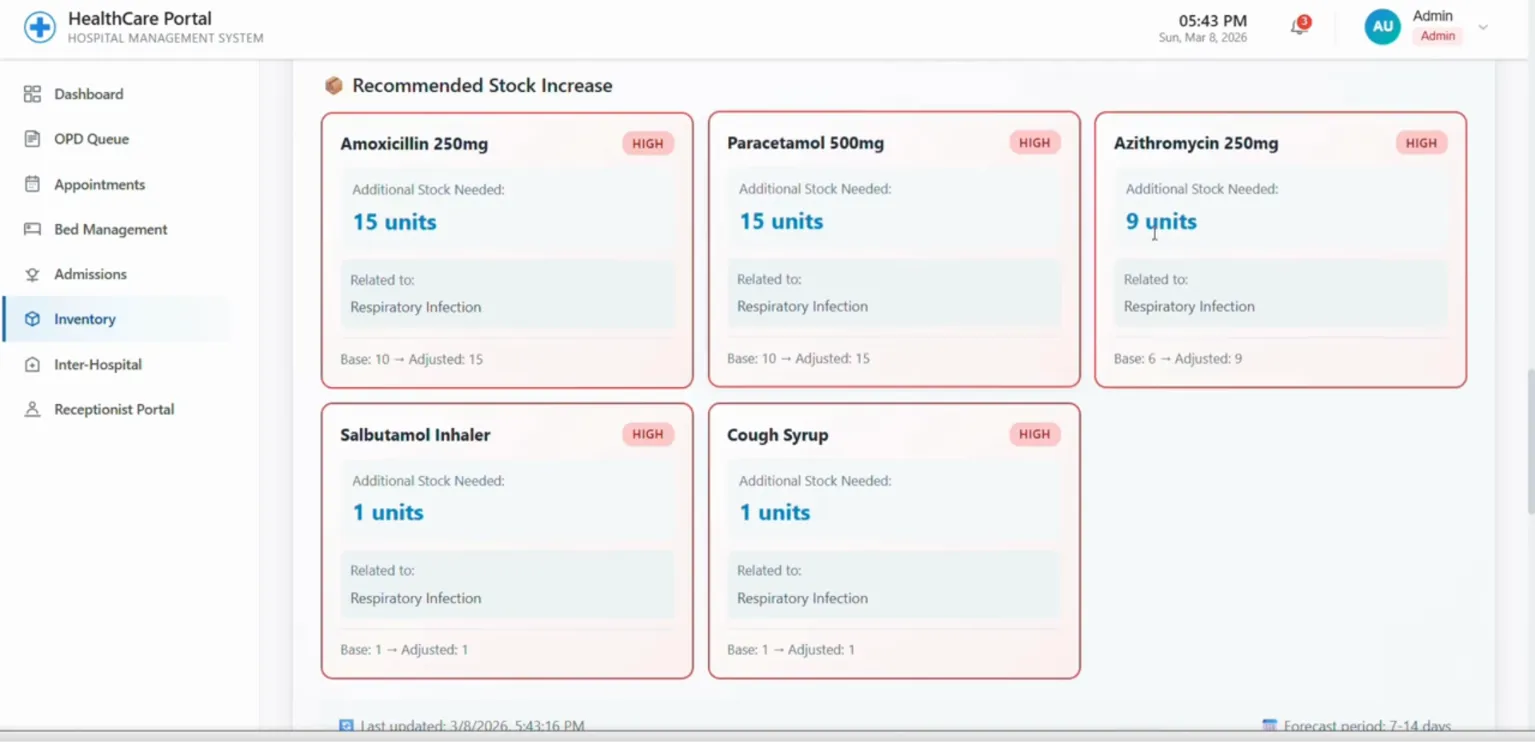
Live weather and air-quality readings from OpenWeatherMap feed a rule-based engine that maps conditions to likely disease spikes and recommends stock increases, such as extra antibiotics and inhalers when respiratory infections are likely. Responses are cached for an hour, with mock data when no API key is configured.
- Current weather + AQI
- Condition-to-disease mapping
- Recommended stock adjustments
- 1-hour response cache
- 03
One platform, four roles, real payments
Django REST Framework serves 11 feature apps behind JWT authentication over a 33-table MySQL schema. Each role gets its own dashboard, a public city view shares anonymised bed and ICU availability across hospitals, and billing runs through Razorpay with HMAC-SHA256 signature verification on every payment.
- 11 Django feature apps
- 33-table MySQL schema
- JWT authentication and role-based dashboards
- HMAC-SHA256 verified payments
CIn the product
Screens
Outcome
Built end to end as a hackathon project: a working platform covering OPD queues, beds, admissions, inventory, inter-hospital sharing and billing. The full source is on GitHub.